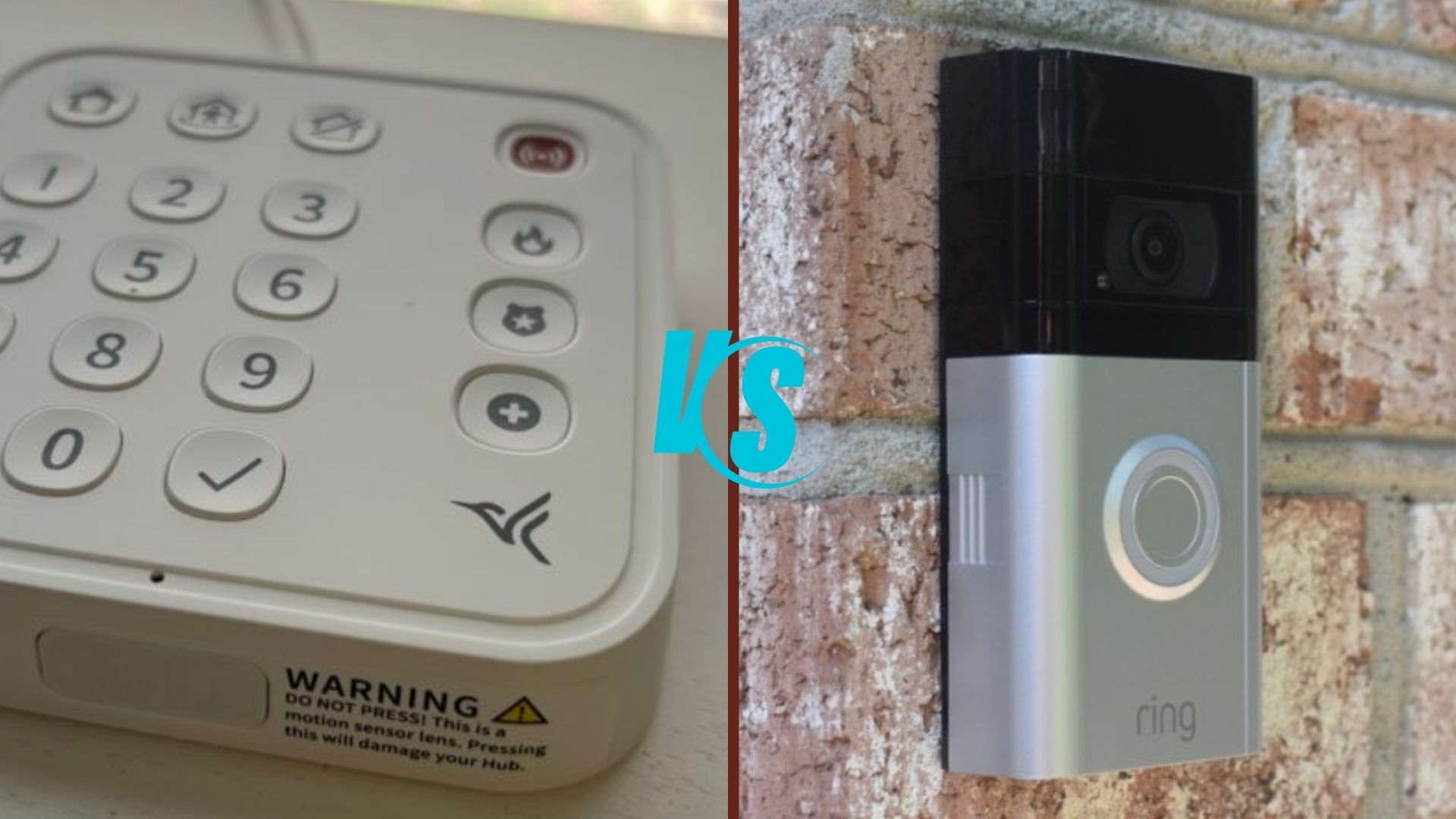
Ring and Arlo are the two big names in home security cameras, though both companies offer more than just cameras, with a wide range of products. Given that both systems require a subscription, it makes sense to buy all of your devices from the same company. So, which one is best? We’ve pitted the two against each other to help you make the right choice.
If you want to widen your choice beyond Ring and Arlo, our guides to the best video doorbells and best security cameras are worth a look.
Ring vs Arlo: quick comparison
| Ring | Arlo | |
| Camera resolution | Up to 4K | Up to 4K |
| 2K cameras | Yes | Yes |
| 4K cameras | Yes | Yes |
| Colour night vision | Selected models | Selected models |
| Smart detection | Person, package, vehicle and more depending on plan/model | Person, vehicle, package, animal, fire and custom, depending on plan |
| Smart home | Alexa | Alexa, Google Home, Apple Home, SmartThings and IFTTT |
| Cloud storage | Up to 180 days | Up to 60 days |
| Lowest paid plan | $4.99/month | $7.99/month |
| Unlimited-camera plan | $9.99/month | $17.99/month |
| Professional monitoring | Yes | Yes |
| Whole-home alarm | Ring Alarm | Arlo Home Security System |
| Contract | No | No |
Price and camera lineup
Ring’s range now stretches from the $79.99 battery-powered Outdoor Cam to the $199.99 Outdoor Cam Pro. The latter is a much more serious camera than older Ring comparisons suggest, offering 4K video, 3D Motion Detection and wired, plug-in or PoE installation options.
There is also the $99.99 Outdoor Cam Plus, which records in 2K, while the newer $169.99 Spotlight Cam adds 2K video, motion-activated illumination and several power options. At the top of the range, the Spotlight Cam Pro and Floodlight Cam Pro bring 4K recording.
The switch to 2K and 4K is important. The argument against buying Ring used to be that you were effectively buying into a 1080p ecosystem while competitors were pushing 2K and 4K. That argument no longer holds across the range.
Arlo’s lineup remains more heavily weighted towards higher-resolution cameras. Its Pro 6, for example, records in 2K HDR, has a 160° diagonal field of view and colour night vision, while the Ultra range goes up to 4K.

Arlo’s top-of-the range cameras are battery-powered models, with a smaller choice of wired models, primarily aimed at indoors. Ring has a wider choice of models, with battery- and wired- versions of the same camera often available, depending on preference.
Ring also has the wider range of doorbells, with multiple battery and wired models to choose from, whereas Arlo has the one doorbell.
Winner: Ring
Video quality: Arlo still has the edge, but Ring has caught up
If your main reason for buying a security camera is being able to zoom into a face, read a number plate or identify what’s happening at the far end of your garden, Arlo remains the stronger choice.
Its high-end cameras combine 2K or 4K resolution with wide-angle lenses, HDR and colour night vision. Arlo’s current Pro 6, for example, has a 160° diagonal field of view, while Arlo advertises up to 180° on some cameras. That means that its cameras have a wider view, capturing more details.
Ring has nevertheless made a significant jump. Its current Outdoor Cam Plus records in 2K, while the Outdoor Cam Pro and Spotlight Cam Pro can record in 4K. Ring also warns that 2K and 4K recording can increase bandwidth use and may affect streaming performance or notification delays.
In our tests, Arlo cameras have generally been a little sharper than Ring’s, although the gap has narrowed significantly with newer models.
Winner: Arlo
Live view and notifications
Nobody wants to get millions of notifications a day, so it’s important to have a system that narrows them down so you only get the important ones. Both cameras have several ways of doing this, but when it comes to object detection, Arlo is marginally ahead.
Depending on where you live, the cloud subscription and options vary. But, Arlo cameras are capable of person, anima, vehicle and package detection, so you can choose which combination you want want to record and/or be alerted about.
Newer features include fire detection, with a camera able to spot flames before a smoke detector, and custom detection, which lets you programme a change to watch for (a garage door opening, or back door being left open, for example).
In addition, you can also turn on audio detection and have cameras listen out for barks, screams, glass breaks and gunshots. Notifications are captioned with what’s happening, powered by AI.

Ring is a little behind, offering just person, package, and vehicle alerts as standard. Pay more and you can upgrade to get Familar Faces (facial recognition). With its AI-powered systems, Ring offers captions in notifications and powerful search.

Both of the systems described come into action after a camera has woken up, but there are tools to manage how motion detection is activated. With Arlo, the options are more limited: you can set motion sensitivity and draw activity zones.
Ring’s cameras support these, but some of its more advanced cameras and doorbells also have 3D Motion Detection. This feature uses Radar, so you can set a motion detection distance. For example, if you live on a busy road, you can set your Ring doorbell to ignore all movement outside of your front yard, dramatically cutting down on the number of alerts you get.
Both systems respond in a similar amount of time, and broadband speed, mobile connection and your location all play a part.
Winner: Arlo for AI detection, Ring for hardware
Smart home integration
Arlo supports Amazon Alexa, Apple Home, Google Home, IFTTT and Samsung SmartThings, although compatibility varies by camera. Current compatible models include newer Pro and Ultra cameras as well as several Essential models.
Apple Home support is particularly important because Arlo only relatively recently expanded support to its newer Essential Second-Generation range.
Compatible Arlo cameras can appear in Apple’s Home app, provide live feeds and screenshots, support two-way audio and send motion and audio notifications.
Ring is much more tightly tied to Amazon, which is no surprise. Its official smart-home integration is centred on Alexa, with Echo Show and other compatible Alexa devices able to display Live View, announce events and even let you answer your door without touching the app.
That makes Ring fantastic if your home already revolves around Echo speakers, Echo Show displays and Alexa routines.
But if you use Google Home or Apple Home, Ring’s ecosystem limitation is difficult to ignore. Ring itself confirms that Alexa is its supported smart-home integration.
Winner: Arlo for wider compatibility, Ring for deeper Alexa integration
Subscription plans and cloud storage
This is where Ring becomes considerably more attractive.
Ring’s current plans start at $4.99 per month for one camera or doorbell with up to 180 days of video history and smart alerts. Ring Multi costs $9.99 per month and covers all eligible devices at one location, while Ring Pro costs $19.99 and adds features including professional monitoring and more advanced AI features.
The 180-day history is particularly generous. If something happens while you’re away for several months, you have a much better chance of still being able to retrieve it. You do need to up the history limit in the app to get this, though.
Arlo’s paid plans start at $7.99 per month for one camera, or $17.99 for unlimited cameras when billed annually. Arlo’s current plans provide 60-day video history on supported plans and add features such as person and vehicle recognition, package and animal detection and custom detection.
Arlo’s subscription makes more sense when you consider what the cameras are doing with that footage. Its higher-resolution cameras and more sophisticated object recognition require more processing, so the subscription is doing more than simply acting as a cloud hard drive.
Neither company requires a long-term monitoring contract, so you aren’t locked in if you decide the subscription isn’t worthwhile.
Still, if you are planning to put cameras around an entire property, the difference between $9.99 and $17.99 every month quickly adds up.
Winner: Ring
Professional monitoring and whole-home security
Ring has a substantial advantage if you want a proper alarm system rather than a collection of cameras. Ring Alarm supports entry sensors, motion detectors, environmental sensors and other accessories, and its base station can provide cellular backup.
The current Ring Pro plan costs $19.99 per month and includes 24/7 professional monitoring for Ring Alarm. If the alarm is triggered, Ring can contact you and, where appropriate, request emergency dispatch.
Ring also has a more unusual $99-per-month Virtual Security Guard option, which adds live video monitoring by real agents and real-time intruder deterrence. That’s expensive, but it demonstrates how far Ring has moved beyond being a doorbell company.
Arlo has its own Home Security System built around an all-in-one sensor. The sensor can detect several conditions, including entry, motion, temperature, water, freezing and tilt. It’s a clever approach, but it isn’t quite as straightforward as having dedicated door and window sensors throughout the house.
Arlo Premium costs $24.99 per month when billed annually and adds 24/7 professional monitoring and emergency response alongside its camera features.
For someone who wants cameras first and an alarm second, Arlo’s approach makes sense. But for one system covering cameras, doors, windows, motion and professional monitoring, Ring is the much easier recommendation.
Winner: Ring
Which one is better for a video doorbell?
Ring has a far wider choice of doorbells, so you’re more likely to find the right model for you, whether you want something cheap and basic, or an advanced 4K, battery-powered model. Arlo has the one doorbell. That’s fine if that model suits your home, but choice is far more limited.
Ring vs Arlo: which should you buy?
If you’re buying cameras first, Arlo is the more attractive proposition. Its cameras still have a clear image-quality advantage at the upper end, with 2K and 4K options, wide fields of view, HDR and colour night vision. Its AI detection is also more detailed, and the ability to work with Apple Home, Google Home and Alexa makes it considerably less restrictive.
But if you’re buying a security system rather than just cameras, we’d choose Ring. Ring’s current lineup is much better than the old 1080p-versus-4K comparisons suggest. There are now 2K and 4K Ring cameras, including the Outdoor Cam Pro and Spotlight Cam Pro.
More importantly, Ring gives you a much stronger route from a single doorbell to a complete alarm system. You can add entry sensors, motion sensors, cameras and professional monitoring without creating a patchwork of different products.
The cheaper subscription is another major advantage. $9.99 per month for unlimited devices at one location is considerably easier to justify than $17.99 for Arlo, particularly if you’re installing several cameras.
In short, Arlo is a better for overall video quality and smart AI features, but it’s more expensive to buy into and has less hardware choice. Ring has a far wider choice of cameras, and a cheaper cloud service, at the expense of some detection features. Ring also has the better alarm system, making it a better overall choice for most homes.
The post Ring vs Arlo: which security camera system should you buy? appeared first on The Ambient.