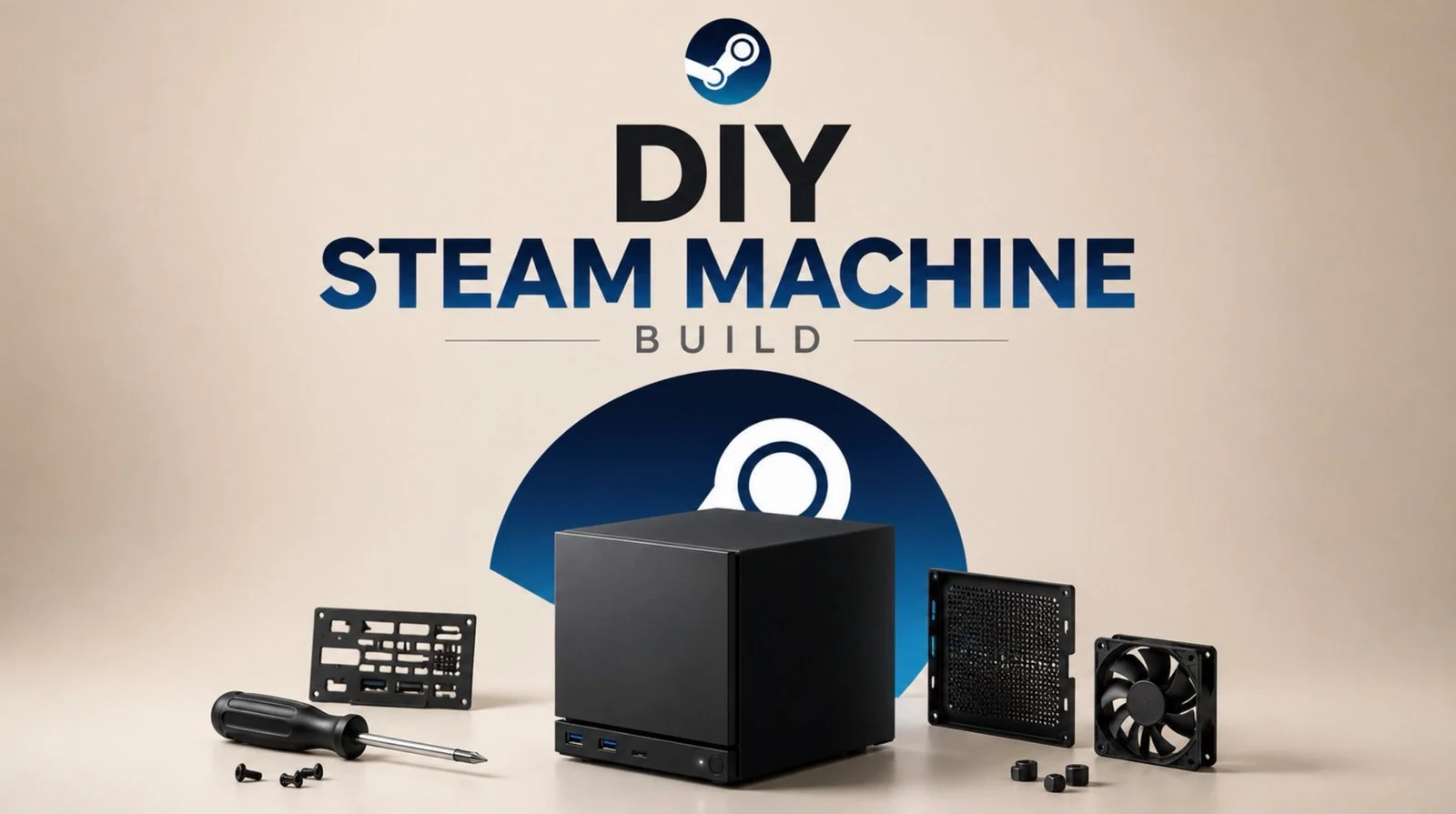
Building a DIY Steam Machine allows for a gaming system tailored to specific needs, combining performance and customization within a manageable budget. In a breakdown by Zac Builds, the project centers on components like the AMD Ryzen 5600X CPU and RX 6600 XT GPU, which support smooth 4K gaming while keeping costs under $1,000. The design also incorporates a custom case made from glass fiber-reinforced ABS, offering durability and modularity for future upgrades.
Discover how to select hardware that balances cost and performance, implement advanced cooling strategies and navigate software compatibility challenges, such as using a Linux-based operating system. Gain insight into overclocking techniques and explore a comparison between this DIY build and Valve’s official Steam Machine, focusing on differences in flexibility, performance and overall expense.
Why Build a DIY Steam Machine?
TL;DR Key Takeaways :
- Building a DIY Steam Machine allows for superior gaming performance, cost-efficiency and customization compared to Valve’s official model.
- Key hardware components include an AMD Ryzen 5600X CPU, AMD RX 6600 XT GPU, 16GB DDR4 RAM and a B550 Micro ITX motherboard, all for under $1,000.
- A custom-designed 3D-printed case enhances aesthetics, functionality and upgrade flexibility, featuring modular panels, LED lighting and dust filters.
- Performance optimizations such as advanced cooling, overclocking and AMD FSR technology ensure smooth 4K gaming with frame rates exceeding 60 FPS.
- Using a Linux-based OS (Basite) instead of Steam OS resolved compatibility issues, providing a stable and efficient gaming platform with access to Steam’s library.
Building your own Steam Machine offers several advantages over purchasing a pre-built system. The primary goal is to achieve superior gaming performance while maintaining a lower overall cost. By taking a hands-on approach, you can:
- Customize hardware to match your specific gaming requirements, making sure optimal performance for your favorite titles.
- Design a unique case that reflects your personal style and enhances functionality.
- Optimize the system for demanding gaming scenarios, making sure smooth gameplay and high frame rates.
The result is a high-performance, budget-friendly gaming machine that balances power, aesthetics and adaptability, making it an excellent choice for gaming enthusiasts.
1: Choosing the Right Hardware
Selecting the right components is the foundation of any successful DIY Steam Machine build. By combining new, used and open-box parts, you can maximize performance while keeping costs under control. For this build, the following components were chosen:
- CPU: AMD Ryzen 5600X, offering exceptional multi-threaded performance for gaming and multitasking.
- GPU: AMD RX 6600 XT, capable of delivering smooth 4K gaming experiences with modern titles.
- RAM: 16GB DDR4, making sure seamless multitasking and fast load times.
- Motherboard: B550 Micro ITX, providing compactness and compatibility with the chosen components.
This hardware combination delivers a powerful gaming experience while keeping the total cost under $1,000, making it a cost-effective alternative to pre-built systems.

Find more information on DIY Steam Machine by browsing our extensive range of articles, guides and tutorials.
2: Designing a Custom Case
A standout feature of this project is the custom-designed case, which not only enhances the system’s aesthetics but also improves functionality. The case was 3D-printed using glass fiber-reinforced ABS, a material known for its durability and heat resistance. Key design features include:
- Modular front panels: Allowing easy access to internal components and simplifying future upgrades.
- LED light bars: Providing customizable lighting effects to match your gaming setup.
- Dust filters: Maintaining airflow and keeping internal components clean for optimal performance.
The compact and sleek design mirrors the aesthetic of Valve’s official Steam Machine while offering greater flexibility for upgrades and modifications, making sure the system remains relevant for years to come.
3: Optimizing Performance
To achieve top-tier gaming performance, the system was fine-tuned using advanced cooling and overclocking techniques. These optimizations included:
- High-quality cooling: Installing an efficient cooling system to maintain stable temperatures during extended gaming sessions.
- Overclocking: Boosting the Ryzen 5600X CPU and RX 6600 XT GPU to enhance frame rates and responsiveness.
- AMD FSR technology: Using FidelityFX Super Resolution to improve visual quality without compromising performance.
These enhancements resulted in consistent frame rates exceeding 60 FPS at 4K resolution, delivering a smooth and immersive gaming experience that rivals high-end pre-built systems.
4: Tackling Software Challenges
While Steam OS was the intended operating system for this build, compatibility issues with newer hardware necessitated an alternative solution. A Linux-based OS called Basite was chosen instead. Basite closely resembles Steam OS and offers:
- Access to Steam’s library: Making sure compatibility with a wide range of games and features.
- Stable performance: Providing a reliable and efficient gaming platform for demanding titles.
Although the installation process required some adjustments, the end result was a seamless gaming experience, with the system running smoothly and efficiently.
5: Analyzing Costs
One of the key advantages of building a DIY Steam Machine is cost efficiency. The total cost of this project was approximately $950, slightly under the rumored $1,000 price of Valve’s official model. Here’s a breakdown of the expenses:
- Core hardware: $800, covering the CPU, GPU, RAM and motherboard.
- Custom case and materials: $150, including 3D printing and finishing materials.
Despite the added expense of designing a custom case, the build remained cost-effective compared to pre-built systems with similar specifications, offering better performance and greater flexibility.
DIY Steam Machine vs Official Model
When compared to Valve’s official Steam Machine, the DIY version offers several distinct advantages:
- Performance: Gaming benchmarks show up to 50–100% improvement in frame rates and responsiveness.
- Customizability: Fully upgradeable hardware ensures the system can adapt to future gaming needs.
- Versatility: Additional ports and storage options provide enhanced functionality.
However, there are some trade-offs to consider:
- Size and power consumption: The DIY build is larger and consumes more power (300W vs. 110W for the official model).
- Effort and expertise: Assembly and configuration require more time and technical knowledge, making it less accessible for beginners.
For those willing to invest the time and effort, the DIY Steam Machine offers a compelling alternative to pre-built systems, delivering superior performance and customization at a competitive price.
Media Credit: Zac Builds
Disclosure: Some of our articles include affiliate links. If you buy something through one of these links, techschimp Gadgets may earn an affiliate commission. Learn about our Disclosure Policy.