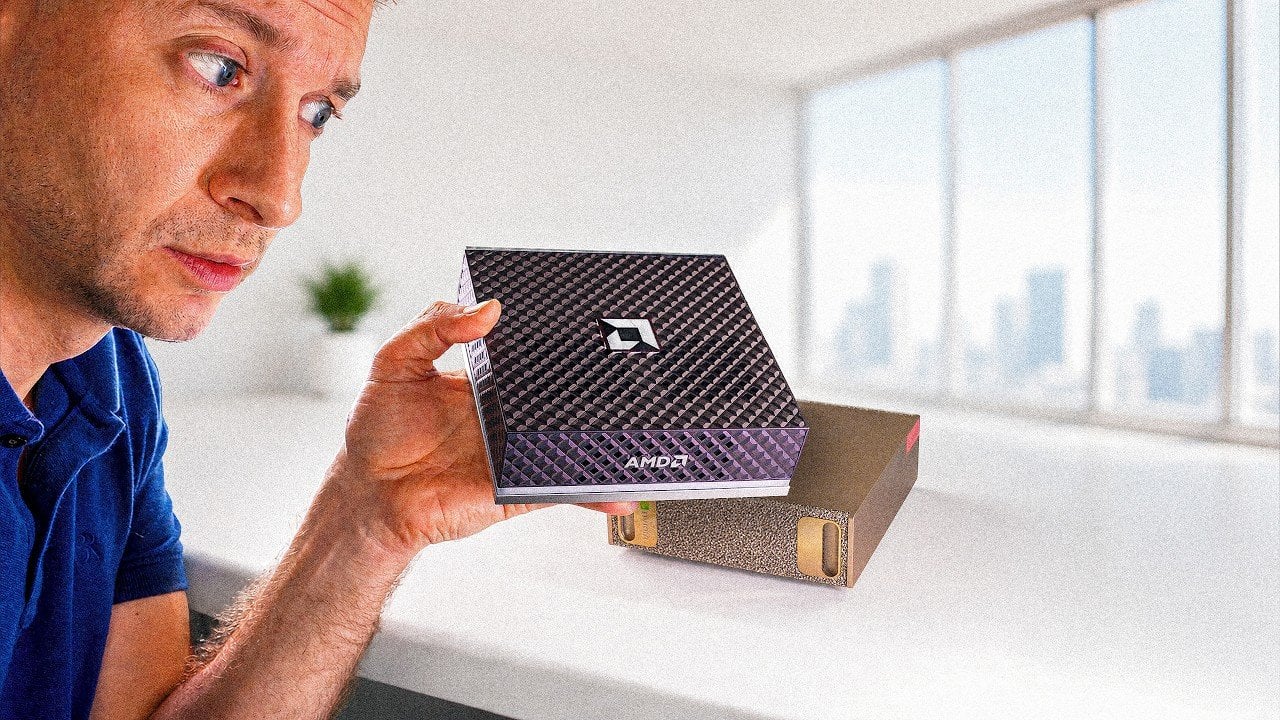
AMD’s recent unveiling of the Ryzen AI Halo marks a significant step in the AI hardware market, offering a compact and accessible alternative to NVIDIA’s DGX Spark. Priced at $4,000, the Halo is powered by the Ryzen AI Max Plus 395 chip and features 128 GB of unified memory, allowing efficient data sharing across its CPU, GPU and Neural Processing Unit (NPU). Alex Ziskind highlights how this hybrid processing approach balances energy efficiency with versatility, making the Halo suitable for a range of AI tasks. However, its performance in compute-intensive scenarios, such as large-scale image generation, reveals some trade-offs in its design.
Explore how the Halo’s x86 compatibility broadens its application across diverse AI frameworks and gain insight into its pre-installed software suite, including LM Studio and Comfy UI, which simplifies setup for developers and hobbyists alike. You’ll also learn about its strengths in token generation tasks for natural language processing and the challenges it faces in scaling for enterprise use. This breakdown provides a clear understanding of where the Ryzen AI Halo excels and the considerations to keep in mind before investing.
Key Features and Hardware Overview
TL;DR Key Takeaways :
- The AMD Ryzen AI Halo is a $4,000 compact AI-focused machine designed for developers, AI enthusiasts and hobbyists, offering x86 compatibility and hybrid processing capabilities.
- Powered by the Ryzen AI Max Plus 395 chip, it features 128 GB of unified memory for seamless data sharing between CPU, GPU and NPU, balancing performance and energy efficiency.
- Pre-installed tools like LM Studio and O Llama, along with support for Windows and Linux, make it user-friendly and accessible for AI development across various frameworks.
- While it excels in token generation tasks for natural language processing, it struggles with compute-intensive tasks like large-scale image and video generation, limiting its appeal for high-performance needs.
- The Ryzen AI Halo targets individual developers, small teams and AI enthusiasts who value usability and versatility, but it may not meet the demands of enterprise users or those requiring raw computational power.
The Ryzen AI Halo is powered by the Ryzen AI Max Plus 395 chip, a processor specifically designed to handle diverse AI workloads. Its compact design incorporates 128 GB of unified memory, allowing seamless data sharing between the CPU, GPU and Neural Processing Unit (NPU). This hybrid processing approach strikes a balance between performance and energy efficiency, making it suitable for a variety of AI tasks.
The system supports both Windows and Linux, making sure compatibility with a wide range of software environments. Pre-installed tools such as LM Studio, O Llama and Comfy UI simplify the setup process, allowing users to begin AI development immediately. The inclusion of an x86 architecture further enhances its versatility, supporting a broad array of AI frameworks and applications.
Performance: Strengths and Weaknesses
The Ryzen AI Halo delivers mixed performance results when compared to NVIDIA’s DGX Spark. It performs well in token generation tasks, a critical metric for natural language processing applications. However, it struggles with prefill (prompt processing) and compute-intensive tasks such as large-scale image and video generation. These limitations underscore the Halo’s focus on hybrid processing rather than raw computational power.
Despite these challenges, AMD has made efforts to improve the Halo’s performance through software updates. While it may not rival the DGX Spark in every aspect, its balanced approach prioritizes usability and flexibility, appealing to a specific segment of AI users who value accessibility over sheer power.

Browse through more resources below from our in-depth content covering more areas on local AI setups.
Who Should Consider the Ryzen AI Halo?
The Ryzen AI Halo is designed to cater to three primary user groups, each benefiting from its unique features:
- Developers: The Halo’s hybrid processing capabilities and pre-installed tools streamline workflows for AI-specific development. However, its $4,000 price tag may not be justifiable for general-purpose coding tasks.
- Tinkerers: For those experimenting with AI models, the Halo offers a user-friendly platform with compatibility across various AI frameworks. Its plug-and-play design makes it an excellent choice for hands-on learning and innovation.
- AI Enthusiasts: With minimal setup required, the Halo is accessible to users with varying levels of expertise. Pre-configured software and detailed guides make it easy to get started with AI projects, even for beginners.
Advantages of the Ryzen AI Halo
The Ryzen AI Halo offers several notable benefits that make it a compelling option for its target audience:
- x86 Architecture: Ensures compatibility with a wide range of software and tools, making it versatile for diverse AI tasks.
- Pre-installed Software: Reduces setup time, allowing users to focus on development and experimentation rather than installation and configuration.
- Hybrid Processing: Combines an NPU and GPU to efficiently handle AI workloads while balancing energy consumption, making it suitable for various applications.
- Comprehensive Resources: AMD provides detailed guides and resources to help users navigate AI tasks effectively, enhancing the overall user experience.
Limitations to Consider
While the Ryzen AI Halo has several strengths, it also comes with some limitations that potential buyers should consider:
- Compute-Intensive Tasks: The Halo underperforms in scenarios requiring significant computational power, such as large-scale image and video generation, limiting its appeal for users with high-performance needs.
- Scalability: Its compact design and heat management challenges restrict its ability to scale effectively in multi-unit setups, making it less suitable for enterprise-level deployments.
- Power Efficiency: The Halo consumes more power than ARM-based systems like the DGX Spark, which may impact its efficiency in certain use cases where energy consumption is a critical factor.
Market Position and Pricing
At a price point of $4,000, the Ryzen AI Halo is positioned as a competitively priced option within the AI hardware market. AMD emphasizes its strengths, such as ease of use, memory capacity and hybrid processing, while downplaying areas where the DGX Spark outperforms it. This selective positioning reflects the Halo’s target audience: users who prioritize accessibility and versatility over raw computational power.
The Halo’s pricing strategy and feature set make it an attractive option for individual developers, small teams and AI enthusiasts who value a user-friendly experience. However, for enterprise users or those requiring high-performance hardware for compute-intensive tasks, alternatives like the DGX Spark may offer better value.
Final Perspective
The Ryzen AI Halo represents a thoughtful addition to AMD’s lineup, offering a balanced approach that bridges accessibility and functionality. Its x86 compatibility, pre-installed software and hybrid processing capabilities make it a practical choice for a wide range of AI applications. For developers, tinkerers and AI enthusiasts, the Halo provides a user-friendly platform that simplifies the process of exploring and implementing AI technologies.
However, users with compute-intensive needs or enterprise-level requirements may find the Halo’s limitations in raw performance and scalability to be a drawback. Ultimately, the Ryzen AI Halo carves out a niche for itself in the AI hardware market, appealing to those who prioritize flexibility, usability and a streamlined development experience over sheer computational power.
Media Credit: Alex Ziskind
Disclosure: Some of our articles include affiliate links. If you buy something through one of these links, techschimp Gadgets may earn an affiliate commission. Learn about our Disclosure Policy.