Somewhere between fashion week and the morning commute, street style photography carved out its own category among the different types of fashion photography. These images catch people mid-stride outside shows, on ordinary corners. The light is never adjusted for a shoot.
That rawness is exactly the point. A runway look exists to make a statement from thirty feet away under production lighting. A street style photo exists because someone walked out their door looking good rather than posing like a model for one.
That difference changes how the audience reads the image. Campaigns and runway shots are aspirational in a distant way, built for a version of life most people don’t live. Street style keeps one foot in reality.
Why Street Style Feels More Wearable

Clothes behave differently in motion than they do on a mannequin or under studio light. A coat that looks stiff on a hanger suddenly makes sense once someone’s walking in it with a hem swinging, and hands in pockets.
Street style photography captures that motion, and with it, the small proof that an outfit actually functions in daily life. It also shows the full picture, not just the headline piece. A blazer photographed alone tells half a story.
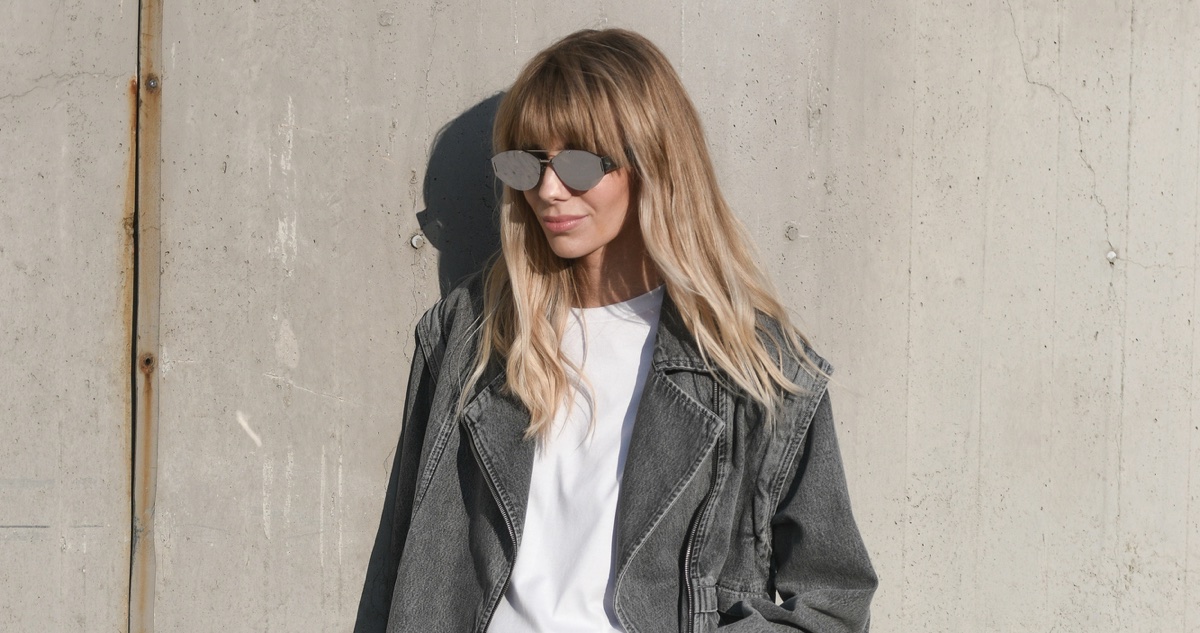
A blazer photographed with a worn tote, scuffed loafers, and cat-eye sunglasses tells you how to actually wear one. These images work because they include the bag, the shoes, the sunglasses, the coat draped just so, all the details that turn a single garment into a finished outfit.
AI fashion photography has started to fill a similar role, generating street style-inspired images that place outfit ideas in realistic city settings without waiting for the right subject to walk by at the right moment.
The Power of Outfit Formulas

Street style photography is where outfit math gets solved in public. A blazer over jeans. A slip dress with combat boots. A trench thrown over sneakers. A plain white tee tucked into wide-leg trousers.
None of these pairings are complicated, but seeing them photographed on a real person, in real light, turns them from an idea into a formula worth repeating. That’s the real service these images provide. They compress the guesswork of getting dressed into a formula you can memorize and reuse.
Instead of standing in front of a closet trying to invent a look from scratch, there’s already a template: put these two categories together and the outfit works. Multiply that by dozens of candid style shots and a viewer builds a small mental library of combinations.
How Accessories Steal the Spotlight

Ask anyone who scrolls through street style galleries, and they’ll admit that the accessories are often doing more work than the clothes. A pair of oversized sunglasses, a structured top-handle bag, a wide leather belt cinched over a plain coat.
These are the details that make an outfit memorable, and candid fashion photography has a way of putting them front and center. Scarves knotted at the neck, layered gold jewelry, or a boot with real hardware. None of it requires reinventing a wardrobe.
A basic outfit, the kind built from a sweater and jeans someone already owns, reads completely differently once a bold shoe or a statement bag enters the frame. That’s the appeal: accessories are the cheapest, fastest way to make a familiar outfit feel new again.
Why Layering Looks So Good on Camera

Layering photographs well because it gives an image depth, and street style photographers know it. A coat left open over a dress. A sweater looped around the shoulders instead of worn. An oversized shirt hanging past a slip skirt.
Each layer adds another texture, another silhouette line, another reason for the eye to linger. What makes this useful beyond the photo is that layering also solves a practical problem. It makes dressing for weather that can’t decide what it wants to do much easier.
A look built in layers can shed a piece by midday and still hold together. Street style captures that flexibility mid-motion, coats half-shrugged off, sleeves pushed up, and in doing so shows you that a styled outfit and a practical one aren’t mutually exclusive.
How Color and Texture Create a Mood

Color theory gets a lot easier to understand once it’s photographed on a person crossing a street. Street style images make the logic visible. You can see a neutral base with one unexpected pop of red, a monochrome outfit broken up by a contrasting bag, or denim paired against leather instead of matched to it.
Texture does similar work. Suede against knit, sheer fabric layered over something structured, or leather next to something soft. None of these pairings need to be loud to register.
Mixing two or three textures in muted tones can read as more considered than an outfit built entirely from one fabric in one shade. Candid fashion photography makes that contrast easy to spot, and easier still to borrow.
The Rise of Off-Duty Model Style

No category of street style gets more attention than the off-duty model look, and it’s not hard to see why. Relaxed denim, a plain tank, a worn leather jacket, ballet flats or sneakers with an oversized coat thrown on last minute can make an outfit look effortlessly chic.
This look works because it feels attainable in a way high-fashion editorial rarely does. It suggests that good style is about trusting a handful of well-chosen basics to carry the whole outfit.
That’s the quiet lesson embedded in most off-duty street style photography: the most photographed looks are often the least fussed-over ones.