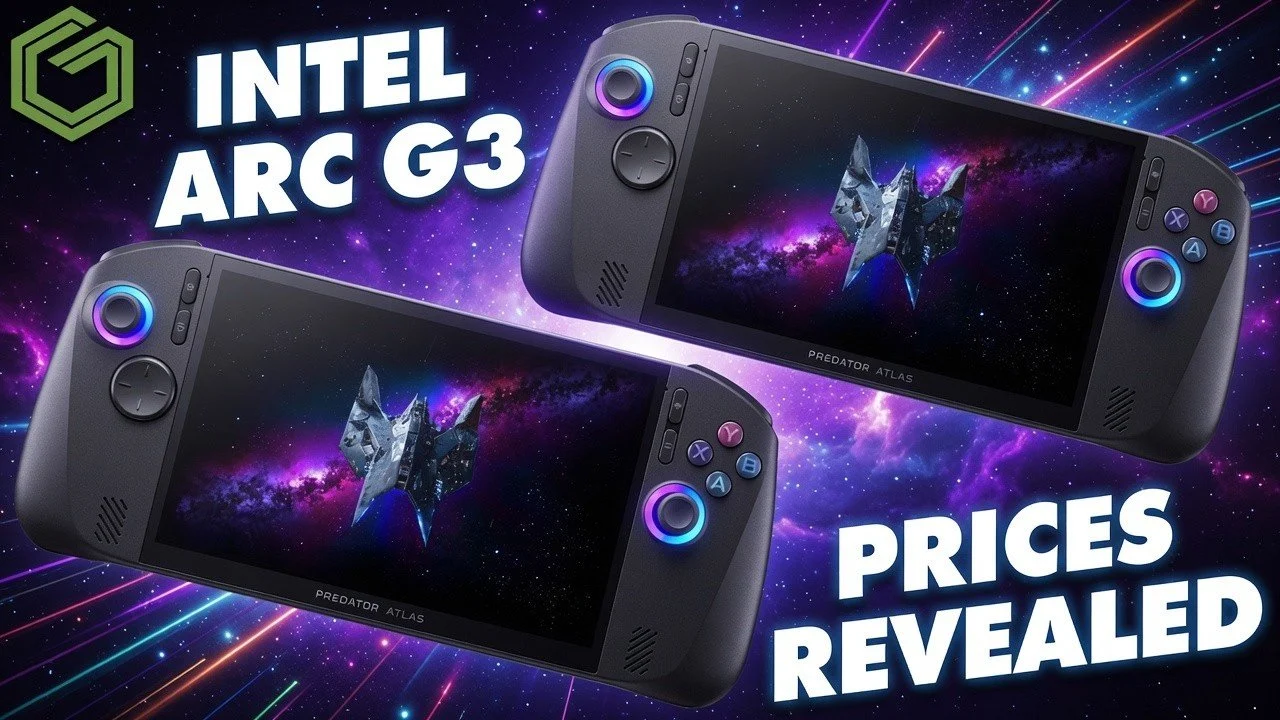
The Acer Predator Atlas 8, a high-end gaming handheld developed in collaboration with Intel, has had its pricing and configurations detailed by GameTechPlanet. Scheduled for an October release, the device will be available in two variants: the Arc G3 model at £999 (~$1,340 USD) and the Arc G3 Extreme at £1,299 (~$2,010 USD). Both models feature Intel Arc graphics, with the Extreme version offering 24 GB of RAM and a 1 TB SSD. While the hardware targets high-performance gaming, the lack of a mid-range option and the use of an IPS display instead of OLED may influence its appeal in a crowded market.
Discover the Atlas 8’s key specifications, such as its 8-inch IPS touchscreen with a 120 Hz refresh rate and Wi-Fi 7 connectivity. Gain insight into its advanced features, including Thunderbolt 4 ports and Variable Refresh Rate (VRR) support and how these aim to enhance gaming performance. Additionally, examine its pricing strategy in comparison to competitors like the MSI Claw and evaluate whether its cost aligns with the expectations of its target audience.
Price Points and Configurations
TL;DR Key Takeaways :
- The Acer Predator Atlas 8, developed with Intel, is a high-end gaming handheld launching in October, with a premium price starting at £999 (~$1,340 USD) for the base model and £1,299 (~$2,010 USD) for the Extreme variant.
- Key specifications include Intel Arc G3 processors, up to 24 GB RAM, 1 TB SSD, an 8-inch IPS touchscreen with 1920×1200 resolution, 120 Hz refresh rate and advanced connectivity options like Wi-Fi 7 and Thunderbolt 4.
- The device targets enthusiasts seeking top-tier performance but lacks a mid-range option, potentially limiting its appeal to budget-conscious gamers.
- Despite its advanced hardware, the absence of an OLED display at its price point may disappoint users prioritizing superior visual quality.
- The Atlas 8 faces stiff competition in a crowded market, with its success hinging on delivering exceptional performance and justifying its premium pricing against rivals like the MSI Claw and Legion Go.
The Predator Atlas 8 is available in two distinct configurations, each tailored to meet varying performance requirements:
- The base model, equipped with the Intel Arc G3 processor, starts at £999 (~$1,340 USD).
- The higher-end Arc G3 Extreme variant, featuring enhanced specifications, begins at £1,299 (~$2,010 USD).
These price points place the Atlas 8 in a higher bracket compared to many competitors, such as the MSI Claw, which starts at $1,799. While the pricing reflects the inclusion of advanced hardware, it raises questions about accessibility. Historically, handheld gaming devices have succeeded by striking a balance between performance and affordability. The Atlas 8’s steep cost may restrict its appeal to a niche audience of enthusiasts willing to invest in premium technology.
Specifications: Power-Packed Features
The Acer Predator Atlas 8 is designed to deliver a premium gaming experience, boasting an array of impressive specifications that cater to demanding users:
- Intel Arc G3: 16 GB RAM, 512 GB SSD, 60 Wh battery
- Intel Arc G3 Extreme: 24 GB RAM, 1 TB SSD, 80 Wh battery
- 8-inch IPS touchscreen with a 1920×1200 resolution
- 120 Hz refresh rate with Variable Refresh Rate (VRR) support
- 500 nits brightness for enhanced visibility in various lighting conditions
- Intel Arc B370 (G3) and Arc B390 (G3 Extreme) graphics with 14 CPU cores
- Wi-Fi 7 connectivity, Thunderbolt 4 ports and UHS-II microSD card support
- Windows 11 optimized for gaming
These features position the Atlas 8 as a high-performance device capable of handling modern games and multitasking with ease. However, the absence of an OLED display, despite its premium pricing, may leave some users disappointed, especially those who prioritize superior visual quality for immersive gaming experiences.

Here are additional guides from our expansive article library that you may find useful on handheld games consoles.
Market Trends and Challenges
The handheld gaming market has seen significant shifts in recent years, with rising component costs driving up prices across the board. The Atlas 8 reflects this trend, offering advanced specifications at a premium cost. However, this pricing strategy may alienate budget-conscious buyers, particularly when competitors like the Legion Go and Ally X have historically provided more affordable options.
One notable omission in the Atlas 8 lineup is the lack of a mid-range configuration priced between $500 and $1,000. This gap limits its accessibility and narrows its target audience to enthusiasts willing to invest in a high-end device. As a result, the Atlas 8 may struggle to compete with devices that offer a broader range of pricing options, catering to both casual and dedicated gamers.
Performance and Build Quality
The Atlas 8 is expected to deliver exceptional gaming performance, thanks to Intel’s Arc G3 and G3 Extreme processors. These components are engineered to handle modern games with ease, making sure smooth frame rates and responsive gameplay. Features like VRR and a 120 Hz refresh rate further enhance the gaming experience, particularly for fast-paced and competitive titles.
However, questions remain about the device’s build quality. Competing devices, such as the MSI Claw, have set high standards for premium materials and ergonomic design. For a device positioned at the higher end of the market, durability and comfort will be critical factors in determining its success. Gamers investing in a premium handheld will expect not only top-tier performance but also a design that supports extended gaming sessions without compromising on comfort or reliability.
What to Consider Before Buying
If you’re evaluating whether the Acer Predator Atlas 8 is the right choice for you, consider the following factors:
- The base Arc G3 model offers a solid balance of power and storage, making it suitable for most gaming needs without exceeding the £999 price point.
- The Arc G3 Extreme variant provides maximum performance and storage, ideal for gamers who require top-tier specifications, though it comes at a significantly higher cost.
- Advanced features like Wi-Fi 7, Thunderbolt 4 and VRR support enhance the device’s versatility and gaming experience.
- The lack of an OLED display, despite its premium pricing, may be a drawback for users who prioritize superior visuals.
Ultimately, your decision should align with your gaming preferences, budget and expectations for value. The Atlas 8 is designed for enthusiasts who prioritize performance and innovative features, but its high price may not justify the investment for casual gamers or those seeking a more affordable option.
Challenges in a Competitive Landscape
The handheld gaming market is becoming increasingly competitive, with manufacturers striving to integrate advanced technologies while managing production costs. Innovations in AI, graphics processing and connectivity have driven up prices, leaving fewer devices in the mid-range price segment. This trend has created a challenging environment for devices like the Atlas 8, which cater to a niche audience.
For the Atlas 8, the combination of premium pricing and the absence of a mid-range option could limit its market share. While its specifications are undeniably impressive, its success will depend on how well it performs in real-world scenarios and whether it can justify its cost compared to competitors. The device’s ability to stand out in a crowded market will hinge on its ability to deliver a superior gaming experience that meets or exceeds the expectations of its target audience.
Media Credit: GameTechPlanet
Disclosure: Some of our articles include affiliate links. If you buy something through one of these links, techschimp Gadgets may earn an affiliate commission. Learn about our Disclosure Policy.