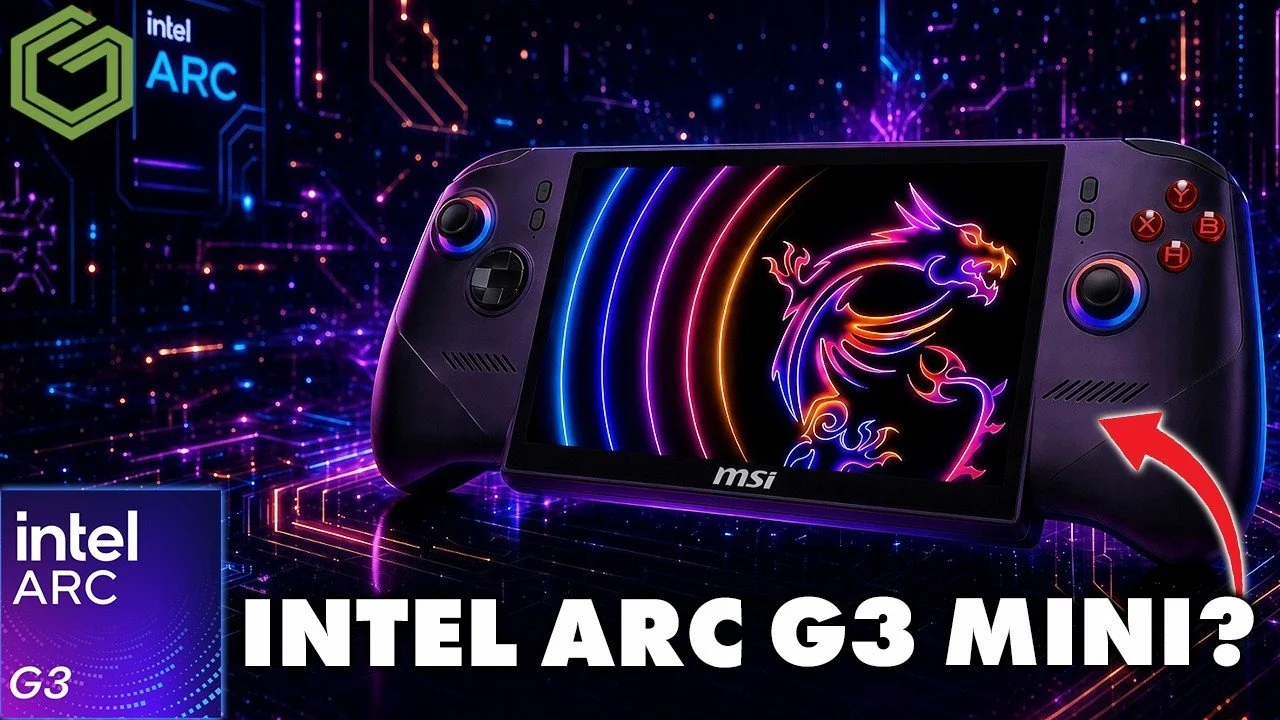
Intel’s upcoming 4×3 Panther Lake processor is set to bring a fresh approach to budget handheld gaming. Designed with a hybrid architecture that combines four performance cores and four efficiency cores, this chip aims to balance power and affordability for casual gamers. Its integrated four XC3 graphics cores, though less robust than Intel’s high-end ARC G3 models, are tailored to handle indie games, older titles and streaming services like Xbox Cloud Gaming. GameTechPlanet highlights how the Panther Lake processor’s low thermal design power (TDP) range of 8 to 25 watts ensures extended battery life and reduced heat, making it ideal for portable gaming devices.
Dive into this guide to understand how the Panther Lake processor stacks up against competitors like the Steam Deck and ROG Ally. You’ll learn about its cost-conscious design, the types of games and tasks it’s optimized for and the expected price range of $599 to $799 for devices using this chip. Explore how Intel’s focus on power efficiency and practical performance positions this processor as a viable option for gamers seeking affordability without sacrificing usability.
Core Features of the Panther Lake Processor
TL;DR Key Takeaways :
- Intel’s 4×3 Panther Lake processor is designed for budget handheld gaming devices, focusing on affordability, power efficiency and casual gaming performance.
- The processor features a hybrid architecture with 8 CPU cores (4 performance and 4 efficiency cores) and 4 XC3 graphics cores, optimized for casual gaming and multitasking.
- With a low thermal design power (TDP) range of 8 to 25 watts, it ensures extended battery life and reduced heat output, ideal for portable gaming devices.
- Targeted at the sub-$1,000 handheld gaming market, devices using this chip are expected to cost between $599 and $799, competing with models like the Steam Deck and ROG Ally.
- The Panther Lake processor addresses market trends by catering to casual gamers who prioritize affordability, portability and compatibility with indie games and streaming platforms.
The Panther Lake processor is built on a hybrid architecture that balances performance and efficiency, making it an ideal choice for casual gamers. Its standout features include:
- Core Configuration: The processor includes eight CPU cores, four performance cores and four efficiency cores, designed to handle gaming, streaming and multitasking while maintaining low power consumption.
- Graphics Capability: It integrates four XC3 graphics cores, a simplified design compared to Intel’s higher-end ARC G3 models, which feature up to 12 XC3 cores. This ensures smooth gameplay for casual titles without overloading the system.
- Power Efficiency: With a configurable thermal design power (TDP) range of 8 to 25 watts, the processor is optimized for handheld devices, offering extended battery life and reduced heat output.
This combination of features positions the Panther Lake processor as a practical and efficient solution for gamers who prioritize portability and affordability over raw performance.
Target Audience and Market Strategy
Intel’s Panther Lake processor is tailored for the growing budget handheld gaming market, a segment that has expanded as gaming hardware prices continue to rise. Devices powered by this chip are expected to resonate with casual gamers who value:
- Playing indie games and older titles
- Streaming content from platforms like Xbox Cloud Gaming or GeForce NOW
- Affordable, portable gaming solutions that don’t compromise usability
With an expected price range of $599 to $799 for devices using this chip, Intel is positioning itself as a strong competitor in the sub-$1,000 handheld gaming market. This pricing strategy directly challenges established models like the Steam Deck, which ranges from $789 to $949 and the ROG Ally, priced between $599 and $999. By offering a more cost-effective alternative, Intel seeks to attract gamers who want a reliable device without the premium price tag.

Below are more guides on Intel Panther Lake from our extensive range of articles.
Performance Comparison with Existing Models
While the Panther Lake processor may not match the high-end performance of Intel’s ARC G3 and G3 Extreme chips, it is designed for a different audience. Devices powered by this processor excel in areas that matter most to budget-conscious gamers:
- Power Efficiency: The low TDP ensures extended battery life, a critical factor for portable gaming enthusiasts who value uninterrupted playtime.
- Cost Optimization: By focusing on essential features rather than high-end specifications, the Panther Lake chip delivers a satisfying gaming experience at a lower price point.
For instance, while the Steam Deck and ROG Ally are known for their robust performance and advanced features, they come with higher price tags. The Panther Lake processor offers a middle ground, providing sufficient performance for casual gaming and streaming while maintaining affordability. This makes it an attractive option for gamers who prioritize value and practicality over innovative technology.
Adapting to Market Trends
The gaming hardware market has experienced significant price increases in recent years, driven by advancements in technology and rising production costs. This has created a demand for affordable handheld gaming devices that still deliver a satisfying user experience. Intel’s Panther Lake processor is well-positioned to fill this gap by offering a balance of performance, efficiency and cost-effectiveness.
Additionally, the growing popularity of indie games and streaming platforms has shifted consumer preferences. Many gamers now seek devices capable of handling these tasks efficiently without requiring top-tier hardware. The Panther Lake chip aligns with these trends, catering to modern gaming habits and providing a solution for users who prioritize accessibility and convenience.
Anticipated Specifications and Pricing
Devices powered by the Panther Lake processor are expected to feature configurations that appeal to budget-conscious gamers. Likely specifications include:
- 16GB of RAM for smooth multitasking and gaming
- 512GB of SSD storage for fast load times and ample game storage
- Low power consumption to maximize battery life
With an anticipated price range of $599 to $799, these devices are positioned as affordable alternatives to existing handhelds, potentially attracting a wide audience of gamers seeking cost-effective solutions. This pricing strategy ensures that the Panther Lake processor remains competitive in a market where affordability is becoming increasingly important.
Challenges and Opportunities
While the Panther Lake processor has the potential to make a significant impact in the budget handheld gaming market, it faces several challenges:
- Competition: Established devices like the Steam Deck and ROG Ally have already captured significant market share, making it essential for Intel to differentiate its offering with compelling features and pricing.
- Performance Expectations: Devices powered by the Panther Lake chip must meet the demands of modern gaming and streaming without compromising the user experience, especially in a competitive market.
Despite these challenges, the opportunities are equally promising. By addressing the needs of casual gamers and filling a gap in the market for affordable handhelds, Intel has the chance to establish itself as a key player in this growing segment. The Panther Lake processor’s focus on power efficiency, cost optimization and casual gaming performance positions it as a strong contender in the evolving landscape of portable gaming technology.
Shaping the Future of Budget Gaming
Intel’s 4×3 Panther Lake processor represents a calculated move into the budget handheld gaming market. With its emphasis on low power consumption, streamlined design and competitive pricing, this chip is poised to redefine portable gaming for casual users. As the demand for affordable gaming solutions continues to grow, the Panther Lake processor offers a compelling alternative to existing devices, meeting the needs of a price-sensitive audience while delivering a satisfying gaming experience.
Media Credit: GameTechPlanet
Disclosure: Some of our articles include affiliate links. If you buy something through one of these links, techschimp Gadgets may earn an affiliate commission. Learn about our Disclosure Policy.